
Em Beihold on Jealousy, Depression, and the Songs That Became “Tales of a Failed Shapeshifter”
It was 2 AM in Mumbai, India, when I opened my laptop and checked my Wi-Fi connection twice, just to be sure. My house was dark, my notes were scattered across the table, and I had spent most of the evening replaying “Hot Goblin” by Em Beihold, letting the song run again and again while trying to absorb the feeling of it. By the time Em showed up on my Zoom screen, the few songs already released from Tales of a Failed Shapeshifter had already taken up space in my head.
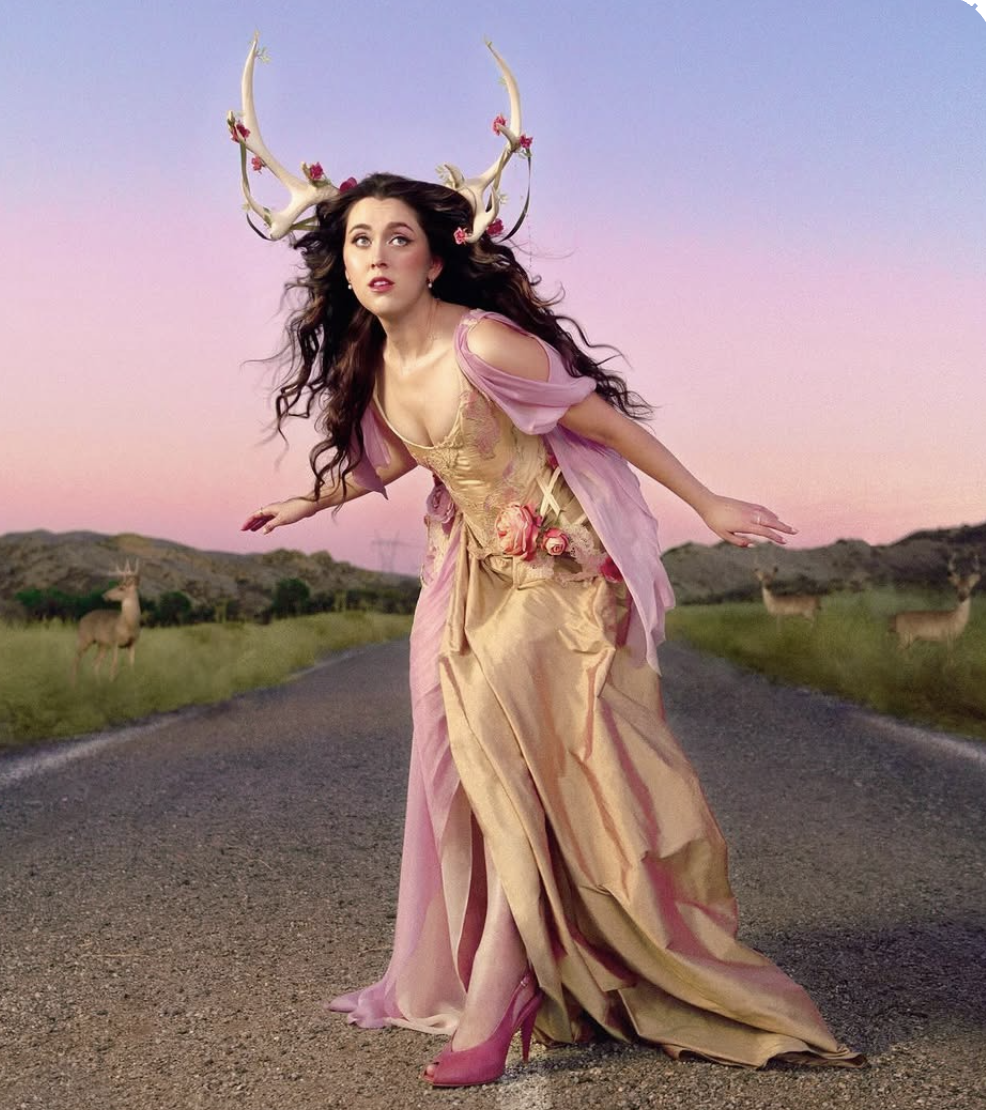
Beihold looked exactly how she sounds on record: thoughtful, observant, and slightly amused by the world around her. She grew up in Los Angeles and started playing piano at six. She trained in jazz and classical before eventually turning her focus toward songwriting.
Then 2022 happened quickly. “Numb Little Bug” went platinum, crossed more than 500 million streams and pushed her to number one on the Billboard Emerging Artists chart. Numbers like that tend to rearrange everything around an artist almost overnight. Writing sessions multiply by a hundred, easily, more collaborators end up reaching out, and suddenly, there are far more opinions about what the next step should look like.
Listening to the songs that were released ahead of our conversation, what really stayed with me the most was how unhurried the album felt altogether. The writing gets to the room to grow, and the piano returns often enough that it starts to feel familiar across the record.
“Brutus” opens with a line that gets straight to the point. “I wish that I could say that I’m not the jealous type / But you’re Caesar and I’m Brutus…” she sings. The reference here to Caesar and Brutus brings in the language of loyalty and betrayal, but the feeling at the centre of the song is honestly very simple and familiar. Admiration and jealousy are often closely linked, and the song explores that tension through the feeling of standing beside someone you admire while quietly wishing that parts of your own life looked a little more like theirs.
“Unicorn” turns to a different emotion. “You stay on my mind / Think about you all the time,” she sings early in the song. The line captures the way a person can return to your thoughts again and again, often more than you expect. The song moves through that cycle of thinking and questioning. It focuses on the wish to feel unique in someone’s life, while also wondering if you are simply another person passing through it.
When the album’s sound came up during the press conference, she traced it back to the music she grew up hearing. “I’m very inspired by the piano, guitar, and singer-songwriter women of the early 2000s,” she said. “Regina Spektor, Fiona Apple, Sarah Bareilles, Feist, Kate Nash, Lily Allen. That lane of music isn’t super prevalent right now, and I’m trying to bring it back.” Her lyrics are usually very straightforward, and the feelings inside them are easy to recognize, though she often lets humor run alongside them so that even the heavier moments don’t feel overwhelming.
“When I was really depressed, I was writing a lot of just sad stuff, and I didn’t like any of it,” she said at one point. “Then I realised it’s because it isn’t a little bit fun. I need to laugh about the darkest things. I have a very dark sense of humour, and that’s truly how I get through life.”
That sense of humor appears in small, slightly strange details throughout her songs. Listeners often notice the creatures that keep turning up, the bug, the goblin, the unicorn, even though Beihold says it was never something she planned.
“I realized after the fact that I have this strange gut reaction to write songs with unassuming adjectives describing creatures,” she said. “It’s just a little peek into my brain. It wasn’t intentional at all.”
When the conversation moved toward loneliness and dependence, ideas that appear in “Scared of the Dark”, she spoke about a time when she stopped trusting her own instincts because too many opinions were around her.
“The ghost in that song is really the fear of being alone,” she explained. “If I imagined that fear living in my house, it would probably be telling me to ignore my intuition. Learning to trust myself again has been the way I deal with that.”
The months after “Numb Little Bug” brought a long stretch of writing sessions. Many of them happened in rooms filled with people she had only just met, and over time, it became harder to tell which thoughts were truly hers.
“There were hundreds of people,” she said. “Writers, producers, everyone. They were all lovely. When you have that many voices around you, it becomes hard to figure out what you actually think.” Eventually, she began pushing against that.
“I had to start trusting my gut again,” she said. “I can be in a session where four people say a line is stupid, and I’ll still be like, I like it, and it’s my song, so we’re going with that.”
The songs that later became Tales of a Failed Shapeshifter arrived slowly for her. Some began with a chorus she wrote alone, while others started as notes she had written years earlier and returned to later.
“Sometimes I would take a piece of a song I wrote two years ago and think, I still remember this, how can we turn it into something new?” she said. “Some songs come out in ten minutes, and some stay around for a long time while you keep working on them.”
There were a lot of attempts along the way.
“I probably wrote around 400 songs,” she said. “Maybe they weren’t all full songs, but at least verses and choruses.” In the end, the ones that stayed were simply the ones she kept returning to.
“Lyrics are really important to me,” she said. “Sometimes people say it’s just about catchy pop, and that bores me. I want every song to say something.”
The album also grew out of a period when she stepped away from work and focused entirely on her well-being. “The album is very much about my journey with depression,” she said. “I stepped back from everything and did outpatient treatment. I reached a low that I didn’t even realize was possible.” One of the most intense moments from that time later became the song “Exorcism.”
“I couldn’t stay still on the couch because I truly felt like there was a demon in my body,” she recalled. “It was a terrible feeling, and it sparked the song. If I can make people feel less alone, that feels like my purpose.”
Away from the music industry, the life she described sounded far more peaceful and ordinary.
“I am neighbors with my parents. I love my cat. I love doing little grandma crafts,” she said, smiling. “When people treat you based on how much you’re popping, it becomes hard to ignore that.”
By the time the call ended, the sky outside my window was still dark. When I closed my laptop, the apartment looked the same as when I had started, though a few lines from the album kept returning to my mind. Listening again later, Tales of a Failed Shapeshifter began to feel less like a dramatic reinvention and more like someone stepping away from expectation long enough to hear their own voice again.